
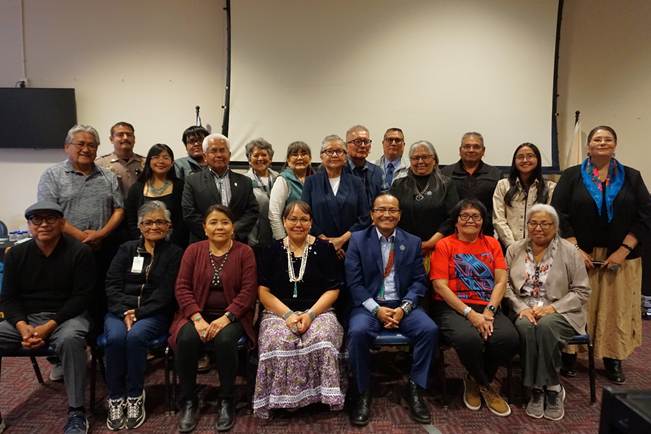
President Buu Nygren and Speaker Crystalyne Curley provided words of encouragement and appreciation for the work that the Advisory Group and Task Force members are doing on the Diné Action Plan (DAP) during their spring gathering on March 20, 2026.
The DAP is the roadmap to address the Navajo Nation’s biggest challenges – suicide, substance abuse, violence, and missing and murdered Diné relatives. The DAP utilizes the strengths of the Navajo people by drawing upon cultural teachings and methods to defeat the challenges, which are known as nayéé’, or modern-day monsters.
The two-day gathering gave leaders, partners and DAP Advisory Group and Task Force members the chance to reflect on accomplishments and challenges in implementing the DAP, which was signed into law in October 2021. The main purpose of the gathering was to hear from the Navajo Nation leaders and from the Epidemiology Center on its data report.
President Nygren addressed the participants in Navajo before translating into English. He stressed that practicing traditional, cultural teachings such as k’é can help to address the nayéé’. Navajo culture and language are critical to the DAP and understanding its foundation.
“In order for us to really put a dent in some of the work that needs to happen, we’ve got to go back to some of our ways of what does it mean to be Navajo? … What does it mean to have love and support? That is why we have a clan system,” he said.
He said that the Navajo Nation needs more rehabilitation and treatment facilities. “We have to expand those types of services,’ he said.
President Nygren commended the effort that the people working on the DAP do on a daily basis.
“We’ve got to get back to where every individual should know we love them, we care about them, and we’re going to do what it takes to support them,” he said.
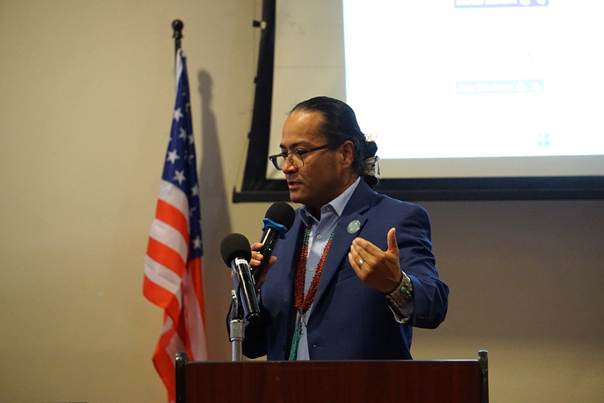
Speaker Curley also expressed her support for using cultural teachings to defeat the nayéé’. “This is something worth trying, worth fighting for. The concept of being raised in a hogan is something we need, that needs to be put into our solutions, into our policies, into our laws,” Speaker Curley said.
Speaker Curley said the newly appointed Youth Advisory Council could help the DAP Advisory Group and Task Forces reach the youth with fundamental teachings.
The data that the DAP’s data team is compiling can help Navajo Nation leaders make decisions and set priorities to reach the main goals, Speaker Curley added.
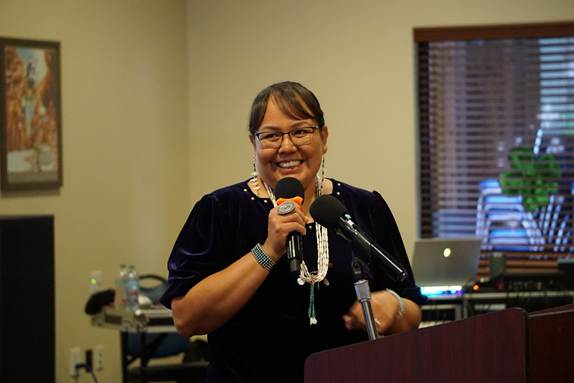
Following the leadership remarks, the Navajo Epidemiology Center (NEC) provided an update on data it has been gathering related to the four monsters. The information is available on the NEC website.
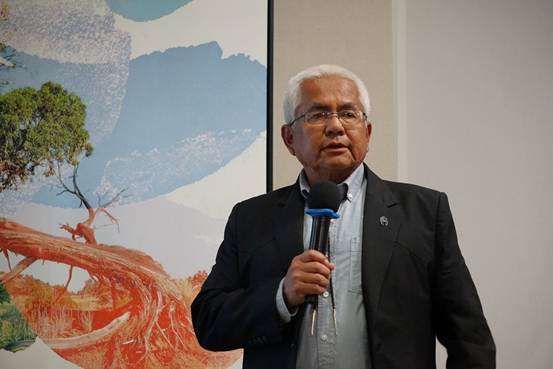
In his remarks, Thomas Cody, Executive Director of the Navajo Division for Children and Family Services (NDCFS), said that the next step for the DAP is to engage the local communities to join the effort to defeat the nayéé’. “The places we don’t see often, that is where a lot of these social ills are festering. How do we address this?” Cody said.
Cody said that one of the barriers for many people on the Navajo Nation is a lack of jobs and that the NDCFS is addressing that with job training opportunities through the P.L. 102-477 plan that the division is implementing. The NDCFS’s 477 plan integrates all education and training, employment, protective services, family reunification and related services to increase opportunities for the people of the Navajo Nation and American Indians with the goal of reducing unemployment in tribal communities.
DAP was previously funded by grants from Casey Family Programs and the Family Violence Prevention and Services Act. Recently, general funds have been approved and used for the quarterly DAP gatherings.
The first day of the spring gathering gave the DAP participants and partners the opportunity to reintroduce themselves and their services to each other. This was important because each is a resource to the others in helping Diné relatives with their challenges related to the nayéé’.
Malcolm Leslie was one of the participants who attended both days. “This is the best thing I’ve ever heard,” he said about the DAP, noting that the people at the DAP gathering meet the monsters head-on on a daily basis. “This is what I’m happy for – the collaboration that is in this room,” he said.
The DAP is in the fifth year of implementation. The plan itself calls for a review after five years. DAP Task Forces are expecting to complete their five-year updates on the goals and objectives by September 2026. The DAP’s external evaluator, One Fire Associates, has submitted progress reports to the Chair and Co-Chair and those reports will be incorporated into the overall five-year evaluation report.
The DAP Advisory Group includes representatives from the Office of the President and Vice President; Chief Justice; Speaker of the Navajo Nation Council; Peacemaking Program; Navajo Government Development; Health, Education, and Human Services Committee; Naa’bik’íyáti’ Committee; Law and Order Committee; Navajo Nation Youth Council; Navajo Nation Women’s Commission; Aging Council; Office of Public Defender; Navajo Department of Public Safety; Criminal Investigations; Division of Behavioral and Mental Health Services (DBHMS); Division of Social Services (now Division for Children and Family Services); Navajo Police Department, including Ramah; Chief Prosecutor; and Department of Diné Education.
The DAP is led by Chair Michael Henderson, Director of the Division of Public Safety, and Co-Chair Sonlatsa Jim, NDCFS Deputy Director.
For more information on the Task Forces, contact:
Substance Abuse and Addiction Task Force Leader: Vera John, Navajo DBHMS, at verajohn@navajo-nsn.gov.
Suicide Prevention Task Force Leader: Anthony Begay, NDCFS, at anthony.begay@ndcfs.org.
Violence Prevention Task Force Leader: Sonlatsa Jim, NDCFS, at sonlatsa.jim@ndcfs.org.
Missing and Murdered Diné Relatives Task Force Chair: Navajo Nation Council Delegate Amber Kanazbah Crotty at acrotty@navajo-nsn.gov.
###