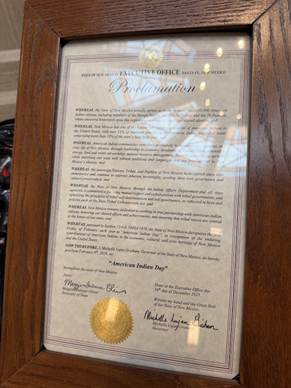
SANTA FE – New Mexico celebrated its annual American Indian Day on February 6, 2026, at the state capitol. The first Friday of February each year is designated American Indian Day for the state and honors the contribution of American Indians to its economic, cultural, and civic heritage.
The Proclamation signed by Governor Michelle Lujan Grisham states, “New Mexico remains dedicated to working in true partnership with American Indian citizens, honoring our shared efforts and achievements, and ensuring that tribal voices are central to the future of our state…”
The Navajo Division for Children and Family Services (NDCFS) attended to support its partnerships with the state of New Mexico.
The event featured the National Anthem by Aspyn Chee, violinist and student at Navajo Preparatory School; Pledge of Allegiance and Honor Song by Santa Fe Indian School students; and remarks from Senator Benny Shendo and Cabinet Secretaries of Children, Youth and Families Department (CYFD), Early Childhood Education and Care Department, Public Education Department, and Higher Education Department. Tribal leadership and community members also spoke on the direct impacts of state investments to communities.
During this legislative session, House Bill 20 is proposed to allow Native Americans in New Mexico the option to obtain a driver’s license or identification card with a Native American designation. The NDCFS maintains the Operation Rainbow Bridge help line and email address with Navajo Nation partners where many calls and emails relate to concerns with identification cards. Access to clear, state-issued identification is an important matter for the safety and security of many Navajo people.
Senate Bill 181 proposes to strengthen and expand the Turquoise Alert system for missing Indigenous people by providing critical funding to modernize the statewide alert system, establish dedicated personnel, and provide community education to help families understand reporting requirements.
During his remarks, President Buu Nygren expressed his support for both bills.
NDCFS prioritizes strong coordination between the state and Navajo Nation tribal child welfare systems in applying the Indian Child Welfare Act (ICWA). Navajo children are often involved in cross-jurisdictional cases, which makes communication and partnership with state counterparts for timely notification and coordinated placements essential.
New Mexico passed the Indian Family Protection Act in 2022, which reinforces ICWA protections and affirms the state’s commitment to tribal collaboration by enhancing protections for Native American children and families to ensure cultural and familial preservation.
NDCFS also collaborates with many state departments and programs through their continued support for the Diné Action Plan (DAP). The DAP is the Navajo Nation’s roadmap for all entities and partners to address public safety and social challenges, particularly with suicide, violence, substance abuse, and missing and murdered Diné relatives. The DAP tells the story of the “Slaying of the Monsters,” in which it teaches that the people must stand together against issues that harm them. The DAP encourages support from partners through multi-disciplinary collaboration.
New Mexico has one of the highest per capita populations of American Indians in the United States and is home to more than 263,000 American Indians. There are 24 Nations, Pueblos and Tribes within the state.
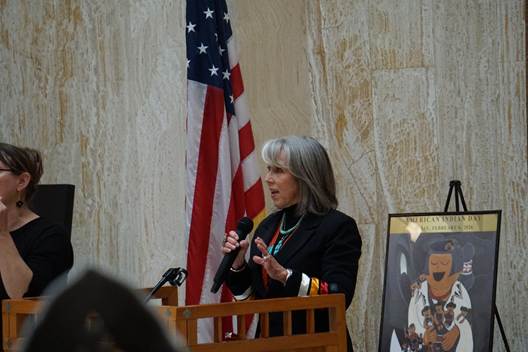
Governor Michelle Lujan Grisham welcomes tribal leaders and members.
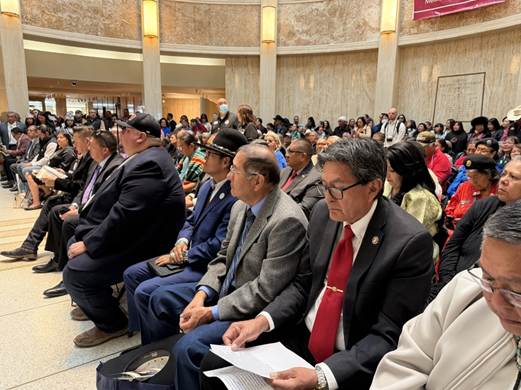
Tribal leaders listen to speakers at American Indian Day.
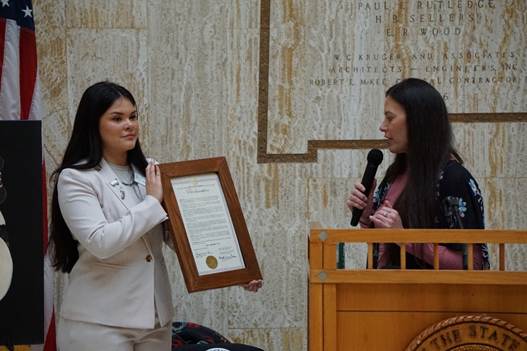
Indian Affairs Department Cabinet Secretary Josett Monette reads the American Indian Day Proclamation.
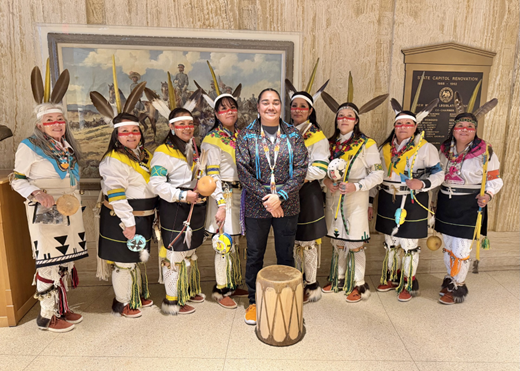
T’owa Shadeh, Ohkay Owingeh Bow and Arrow Women’s Dance Group, performed in the State Capitol Rotunda.
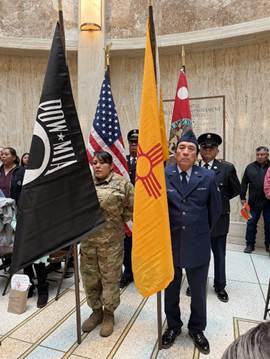
Jicarilla Apache Nation Warriors color Guard conducted the posting and retiring of colors.
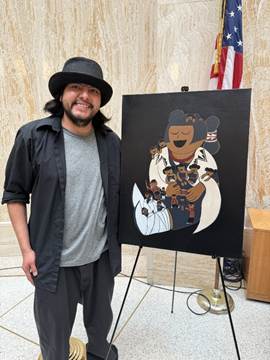
Clever Garcia, Ohkay Owingeh and Tesuque Pueblo, created the “Pueblo Storyteller,” which was selected as the official poster for American Indian Day.
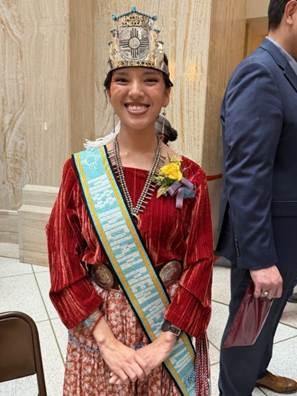
Miss Indian New Mexico Jolene Tsinnijinnie, Navajo Nation and Kewa Pueblo.
###