
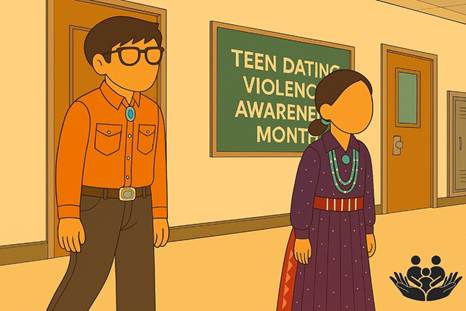
A message from the Navajo Division for Children and Family Services and Department of Family Services
By Althea James, Victim Witness Advocate
February was acknowledged as Teen Dating Violence Awareness Month by Congress in 2010. This is a reminder to start the conversation with your teens and continue communicating with them throughout the year.
From a young age, we teach our children to be respectful and kind to others. We instill k’é in our young children by teaching them their clans that identifies who they are and who their relations are. We tell our children that it is not ok to call others unkind words; it is not ok to yell or hit another. However, talking to teens can be more difficult.
The CDC Youth Risk Behavior from 2021 reports 1 in 12 high school students reported being physically abused by a dating partner, and the same number reported sexual dating violence. Teen dating violence can affect and influence lifelong health issues and well-being. Let us have conversations with our young children and teens by providing awareness of teen dating violence. Here are some of the indications of healthy and unhealthy relationships:
Healthy:
- Respects “no” and does not pressure you to do something you do not want to do.
- Takes accountability when they make a mistake.
- Respects and understands time apart and being together.
- Does not take offense when feedback is voiced.
- Does not lie.
- It is ok to have friends and spend time with them including family members.
- No personal insults.
- Encourages you to succeed with academics/sports.
- Is the same person in public as in private.
Unhealthy:
- Pressures you to move quickly in a relationship.
- Pressures you into sex before you are ready.
- Extreme and constant affection, known as “love bombing.”
- Has been abusive in other relationships.
- Has an issue with your friendship with others or family; displays jealousy and possessiveness.
- Keeps you from achieving your best.
- May display anger or give you the silent treatment.
- Puts you down or degrades you with words or actions.
- Cyber-stalking (social media, tracking devices).
- Sextortion.
- Has a different personality with others in your presence.
- Does not respect boundaries (constant calling, messaging, coming over when not invited).
To support our teens, create a nonjudgmental approach where they can feel safe to talk and be heard. Making statements like, “you’re too young to be dating… don’t hang around with that person…” may cause teens to shut down and break the trust they wish to form. If a teen discloses abuse, let them know they are believed. Teens feel afraid their parents will not believe them or feel they will be in trouble. Not talking about teen dating violence can lead to increased risks of violence, substance abuse, eating disorders, teen pregnancy, STDs, or suicidal ideations. Our Diné children deserve to be safe and have a safe home.
###