
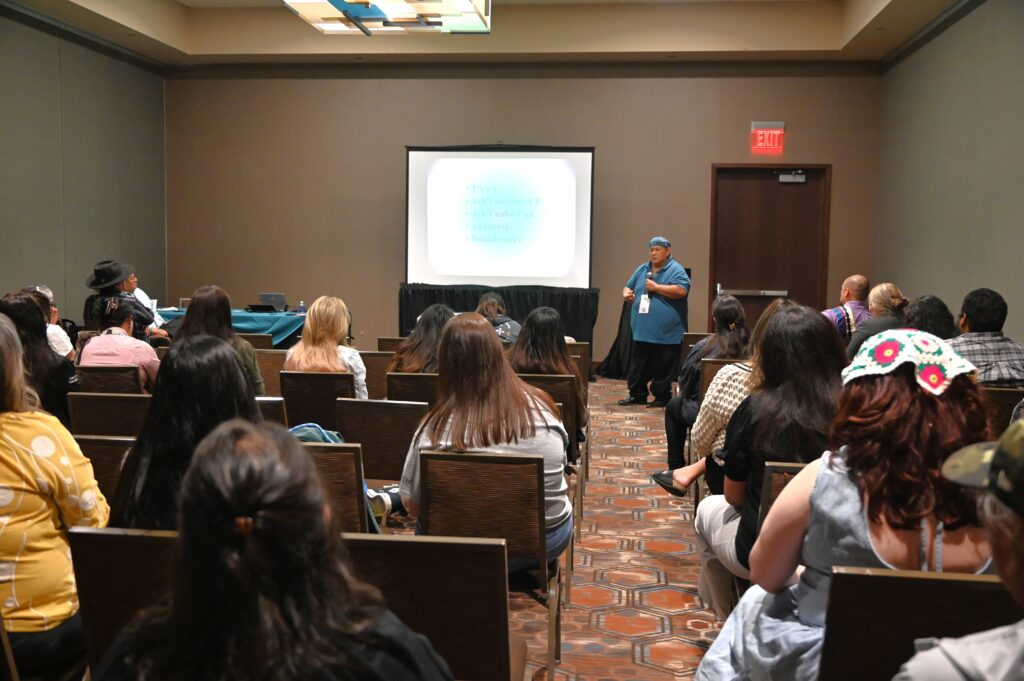
ALBUQUERQUE, N.M. – The Navajo Treatment Center for Children and Their Families (NTCCF) shared knowledge and experience on preventing suicide using cultural methodology during the inaugural Native American Suicide Prevention and Awareness Conference.
The conference was hosted by the Fort Defiance Indian Hospital Board – Health Promotion Disease Prevention July 9-10, 2026, with the theme, “Stronger Together: Honoring Life and Strengthening Communities.” The purpose was to bring together tribal leaders, educators, youth, health professionals, and community members to share culturally informed strategies and methods for suicide prevention.
The presentation by Anthony Begay, NTCCF program manager, and Joseph Sandoval, NTCCF community involvement specialist, was designed to share the challenges and successes of utilizing cultural teachings and methods to prevent the incidence of suicide.
Begay is the lead for the Diné Action Plan’s (DAP) Suicide Prevention Task Force. He explained that with the DAP, the Navajo Nation works together and with partners to address the naayéé’ or modern-day monsters, which includes suicide, through goals and objectives outlined in the plan. The DAP stresses the use of cultural teachings and methodologies to fight the naayéé’.
A significant accomplishment of the Suicide Prevention Task Force was conducting a Hataałi Summit where DAP task force members asked hataałis, or medicine men, how they could help the effort and what the barriers are in doing so.
One of the answers was that those working on the issue need protection ceremonies. Begay said an application by employees is to use arrowheads for their protection.
He encouraged other groups to bring hataałis together to find out how they can help their efforts as well.
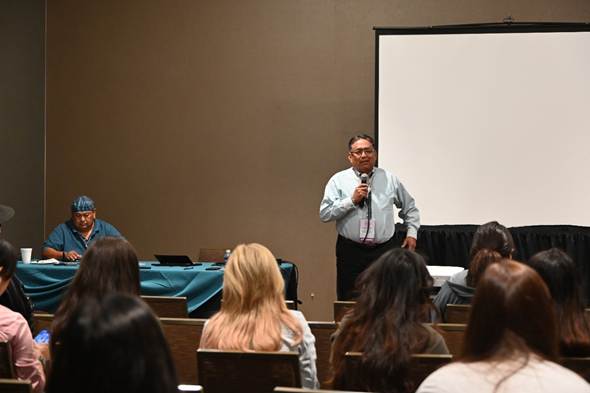
Begay noted that cultural methodologies can complement Western modalities, including through prevention efforts. Cultural teachings give directions about what can and cannot be done to live in hozho, or harmony. One of the stories that was shared with the task force by a hataałi was about living with who you are.
Sandoval spoke more on cultural teachings and methods that can help prevent suicide. For example, one can help young people who have suicidal ideation by speaking in the Navajo language to the individual, using terms of endearment like shí awéé. Another method is practicing teachings that build resilience such as running in the morning or taking a snow bath in the winter.
A major challenge is that talking about suicide is often considered taboo. However, Sandoval said, “In this day and age, we have to talk about it.”
The necessity to speak about the issue is evident. According to the Navajo Epidemiology Center (NEC), American Indians have the highest suicide rates. The NEC reported that in 2023, there were 994 cases of self-harm and suicide at Navajo Area Indian Health Services reporting sites. Risk factors include psychiatric disorders, substance use disorders, depression and anxiety disorders.
The Diné Action Plan is the Navajo Nation’s roadmap to address the four modern-day monsters of suicide, substance abuse, violence, and missing and murdered Diné relatives.
NTCCF is a program under NDCFS that provides outpatient therapeutic services to children impacted by childhood trauma.
###